
Search engine optimization (SEO) is one of the most important parts of digital marketing. A well-optimized website can attract organic visitors, generate leads, and help a business build a strong online presence. However, even small SEO mistakes can reduce website visibility and traffic.
Many businesses focus only on adding keywords and publishing blog posts while ignoring technical SEO, user experience, website speed, and search intent. These mistakes can make it difficult for search engines to understand a website and for users to find useful information.
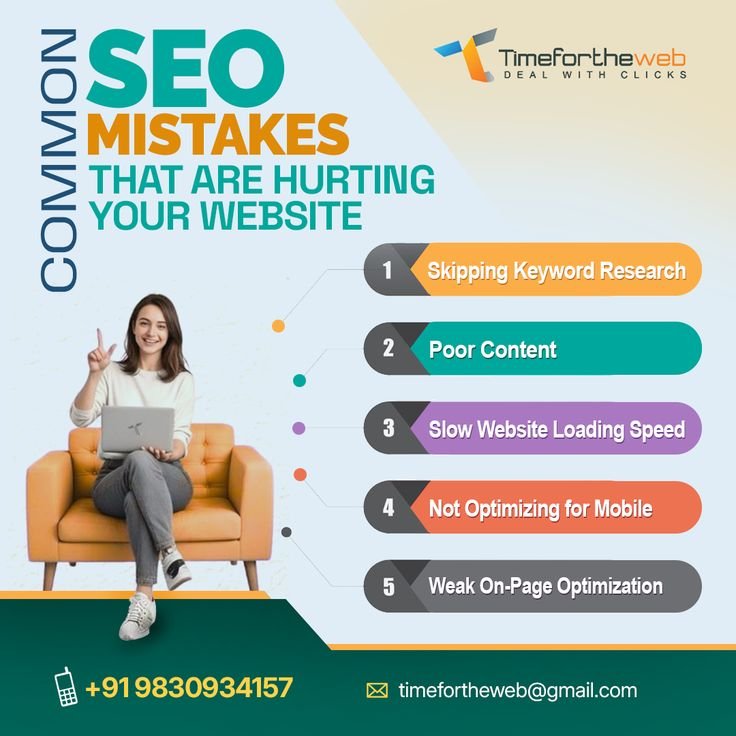
In this article, we will discuss the common SEO mistakes that hurt website traffic and explain how businesses can avoid them.
1. Choosing the Wrong Keywords
Keyword research is an important part of SEO. One common mistake is choosing keywords that do not match the products, services, or information offered by a business.
High-volume keywords may look attractive, but they may not always bring relevant visitors. Businesses should choose keywords based on relevance, search intent, competition, and audience needs.
Using specific long-tail keywords can also help attract users who are looking for particular products or services.
2. Keyword Stuffing
Keyword stuffing happens when a keyword is repeatedly used in content in an unnatural way. Some businesses believe that using a keyword many times will automatically improve rankings.
However, excessive keyword usage can make content difficult to read. Instead of repeating the same keyword, businesses should use natural language and related terms.
The main goal should be to create useful content for readers.
3. Ignoring Search Intent
Search intent refers to the reason behind a user’s search. Understanding search intent is essential for creating effective SEO content.
For example, someone searching for “best digital marketing agency in Kochi” may be comparing service providers, while someone searching for “what is digital marketing” may be looking for basic information.
Content should match what the user is actually trying to find.
4. Creating Low-Quality Content
Low-quality content can hurt a website’s ability to attract and retain visitors. Articles that provide little useful information may not satisfy users.
Businesses should create original, informative, and well-structured content. Blog posts should answer questions, solve problems, and provide useful information.
Quality should always be more important than simply publishing a large number of articles.
5. Publishing Duplicate Content
Duplicate content occurs when similar or identical content appears on multiple webpages. This can make it difficult for search engines to determine which page should be displayed.
Businesses should create unique content for important pages. Product descriptions, service pages, and blog posts should provide their own value.
6. Ignoring Title Tags
Title tags help search engines and users understand what a webpage is about. A poorly written title may reduce the number of people who click on a search result.
Titles should be clear, relevant, and descriptive. The main topic or keyword can be included naturally when appropriate.
7. Writing Weak Meta Descriptions
Meta descriptions provide users with a short summary of a webpage. Although they are not a direct ranking factor, they can influence whether people click on a result.
A good meta description should clearly explain what the page offers and encourage relevant users to visit.
8. Using Poor Heading Structure
Headings make content easier to read and understand. A webpage should have a clear hierarchy of headings and subheadings.
Using descriptive headings allows visitors to scan an article quickly. It also helps search engines understand the structure and topics covered on the page.
9. Ignoring Mobile Optimization
A large number of users browse websites through smartphones. A website that does not work properly on mobile devices can create a poor user experience.
Businesses should make sure their websites are responsive, easy to navigate, and readable on different screen sizes.
Mobile optimization should be an essential part of every SEO strategy.
10. Having a Slow Website
Website speed can have a major impact on user experience. Visitors may leave a website if pages take too long to load.
Large images, unnecessary scripts, poor hosting, and unoptimized website code can contribute to slow performance.
Businesses should regularly test their websites and optimize images, code, and other elements that affect loading speed.
11. Ignoring Image Optimization
Images can improve the appearance and usefulness of a website, but large image files can slow down webpages.
Businesses should compress images and use appropriate file formats. Descriptive file names and relevant alternative text can also help search engines understand images.
12. Forgetting Alt Text
Alt text provides a description of an image. It can help users who rely on screen readers and can also help search engines understand visual content.
Businesses should use concise and descriptive alt text where appropriate. Keywords should not be added unnaturally.
13. Having Broken Links
Broken links can create a poor user experience. Visitors may click on a link expecting useful information and instead reach an error page.
Websites should be checked regularly for broken internal and external links. Replacing or removing broken links can improve website usability.
14. Ignoring Internal Linking
Internal links connect related pages within the same website. They help users discover additional information and help search engines understand website structure.
For example, a blog about SEO can link to a related page about SEO services. Relevant internal linking can help visitors explore a website more easily.
15. Ignoring Technical SEO
Technical SEO includes website crawling, indexing, redirects, site architecture, structured data, and other technical elements.
A website can have excellent content but still experience visibility problems if search engines cannot properly crawl or index its pages.
Regular technical SEO audits can help identify and fix these issues.
16. Not Using HTTPS
Website security is important for both businesses and users. Websites should use HTTPS and maintain a valid security certificate.
A secure website can provide users with greater confidence when they are browsing, submitting forms, or making purchases.
17. Poor Website Navigation
Visitors should be able to find important information without difficulty. Complicated menus and unclear navigation can make users leave a website.
Businesses should create simple navigation with clear categories and links to important pages.
18. Ignoring Local SEO
Local SEO is important for businesses that serve customers in specific locations. Accurate business information can help potential customers find a company online.
Businesses targeting customers in Kerala can create location-focused pages and content. For example, a company may create useful content around services in Kochi and nearby areas.
A digital marketing agency in Kochi can help businesses develop local SEO strategies designed to reach relevant customers in the region.
19. Not Updating Old Content
Information can become outdated over time. Statistics, links, product details, and recommendations may no longer be accurate.
Businesses should regularly review older content and update information where necessary. Updating valuable content can help keep it useful and relevant.
20. Ignoring User Experience
SEO is not only about search engines. Websites also need to provide a good experience for visitors.
A website should load quickly, have readable content, offer simple navigation, and make important information easy to find.
A poor user experience can reduce engagement and conversions.
21. Buying Low-Quality Backlinks
Backlinks can be useful for SEO, but buying large numbers of low-quality links can create problems.
Businesses should focus on earning relevant links through valuable content, partnerships, industry publications, and genuine digital PR.
Quality and relevance are more important than simply collecting a large number of links.
22. Ignoring Search Performance Data
Businesses should regularly monitor their SEO performance. Search data can show which pages receive traffic, which keywords generate impressions, and where opportunities exist.
Tools such as search performance and analytics platforms can provide useful information for improving SEO strategies.
23. Focusing Only on Rankings
Search rankings are useful, but they are not the only measure of SEO success. Businesses should also consider organic traffic, leads, conversions, engagement, and revenue.
The purpose of SEO should be to attract the right audience and support meaningful business goals.
24. Publishing Content Without Research
Content should be based on audience needs and reliable information. Publishing articles without researching the topic can result in weak content.
Before writing an article, businesses should understand their target audience, search queries, competitors, and search intent.
25. Not Having a Clear SEO Strategy
One of the biggest mistakes businesses make is performing SEO activities without a clear plan.
A successful strategy should include keyword research, content creation, technical SEO, local SEO, link building, analytics, and regular optimization.
A professional digital marketing agency in Kochi can help businesses create a structured SEO strategy based on their target audience, industry, location, and business goals.
Conclusion
SEO mistakes can have a significant impact on website traffic and online visibility. Problems such as keyword stuffing, poor-quality content, slow website speed, broken links, weak titles, poor mobile optimization, and ignoring search intent can make it harder for a website to attract the right audience.
Businesses should regularly audit their websites and improve both technical and content-related SEO. Creating useful content, optimizing website performance, improving user experience, and targeting relevant keywords can help build a stronger online presence.
SEO is an ongoing process rather than a one-time activity. Search trends and user behavior continue to change, so businesses should regularly review their strategies and make improvements.
For businesses that want professional support, a digital marketing agency in Kochi can help with SEO, content marketing, social media marketing, website optimization, local SEO, and other digital marketing services. A well-planned SEO strategy can help businesses improve their online visibility and attract more relevant website traffic over time.